
Renovating your only bathroom creates a practical problem before the first tile is removed: where will everyone wash and use the toilet while the room is unavailable?
The answer should be agreed before demolition. Do not assume the toilet can remain usable every evening or that an installed shower is ready to use immediately.
A workable plan identifies which facilities will be unavailable, what alternatives your household will use and who confirms when the new bathroom can return to service.
For Toronto homeowners, those arrangements are part of the renovation budget and schedule—not something to improvise once work begins.

Establish What “Unavailable” Means
Ask the contractor to explain how the proposed scope affects use of the room.
A full renovation may involve removing fixtures, opening surfaces, changing services and installing new assemblies. The bathroom’s availability can change between stages.
Discuss each facility separately:
| Facility | Question to resolve |
|---|---|
| Toilet | During which stages will it be unavailable? |
| Basin | Will there be a suitable alternative for handwashing? |
| Bath or shower | Where will household members wash? |
| Laundry, if shared | Is it affected by access or service work? |
| Water supply | Are interruptions expected elsewhere in the home? |
The aim is to understand the likely restrictions. Some details may remain dependent on progress or findings during construction, so your alternative arrangements need to accommodate that uncertainty.
Choose an Alternative You Can Actually Rely On
Possible arrangements include staying elsewhere, using agreed facilities nearby or combining several options.
Evaluate them against your household’s routine. A gym shower might help one adult but be unsuitable for children, someone with mobility needs or anyone who needs overnight toilet access.
A neighbour’s offer may be generous, but clarify availability rather than assuming it covers every hour of the project.
Ask yourself:
- Can everyone reach the alternative facilities?
- Are they available early in the morning and overnight?
- How will school and work routines operate?
- What happens if construction takes longer than expected?
- Is the arrangement acceptable for every household member?
A backup plan matters. If the main alternative becomes unavailable, you should know what happens next.
Decide Whether Staying Elsewhere Is More Practical
Temporary accommodation adds cost, but it may provide a more workable arrangement than remaining in the house without dependable facilities.
Compare the complete inconvenience and expense of each option. Include travel, parking, meals, pet arrangements and any extra time away from normal routines.
You may choose to relocate for the entire renovation or for a defined period. If you plan to return before completion, agree on what must be available first.
Avoid making a non-refundable return plan around a date that has not been confirmed. Ask the contractor which milestones provide a reliable basis for arranging your return.
If household members have particular health, care or access needs, explain them during planning. They may materially affect whether occupied construction is practical.
Be Cautious About Promises of Temporary Fixture Use
Ask what is actually being proposed if someone says the toilet can be “put back each night.”
Is that arrangement included in the scope? During which stages is it feasible? What happens when the relevant area or connection cannot be used?
Temporary arrangements need appropriate assessment and coordination. They should not depend on entering an active work area or using an installation that has not been confirmed suitable.
The same applies to showers. A shower tray, enclosure or tap being in place does not establish that the complete shower is ready for use.
Build the household plan around confirmed arrangements, with an alternative available when those arrangements cannot be maintained.
Reduce Avoidable Waiting Before Demolition
Some delays can be reduced by resolving decisions and checking supplies before the room is dismantled.
Confirm the selected fixtures and finishes, their compatibility with the design and their delivery arrangements. Ask who checks items for damage or missing components.
Important items may include:
- Vanity and basin.
- Toilet.
- Shower or bath components.
- Taps and valves.
- Tiles and finishing pieces.
- Lighting and other specified fittings.
You do not need every loose accessory on site. You do need a clear understanding of which items must be available for construction to proceed.
An item marked “ordered” is different from one delivered, checked and suitable for the planned installation.
Prepare the House for the Work Route
The renovation affects more than the bathroom.
Ask how workers, tools and removed materials will travel through the home. Discuss protection for stairs, floors and adjoining rooms.
Clear the bathroom and the agreed route before work begins. Identify where deliveries and materials can be stored without blocking essential access.
Also agree on:
- Working hours.
- Entry arrangements.
- Pet separation.
- Rooms that remain private.
- Daily cleanup boundaries.
- Where household members should avoid entering.
If you intend to work from home, explain that early. Noise and activity beside a home office may make another arrangement necessary for part of the project.
Agree on How Changes Will Be Communicated
Hidden conditions can change a renovation scope. Late product changes can also affect progress.
Before work starts, establish who will contact you, how decisions will be presented and who can authorise additional work.
Ask for the practical effect of a change alongside its price. For an only-bathroom renovation, an extra period without facilities may be an important part of the decision.
Make sure the contractor knows how to reach the decision-maker during working hours. If you will be away, identify any times when you cannot respond.
A clear communication process helps keep the household arrangements aligned with the construction plan.
Budget for Living Arrangements Separately
Keep a line in the overall budget for managing daily life.
Depending on your plan, this may include accommodation, travel, storage or other temporary arrangements. Consider what an extension would cost if facilities remain unavailable longer than anticipated.
Ask whether any proposed temporary installations or repeated fixture work are included in the construction price. Do not assume they are free additions.
Also distinguish your household’s arrangements from facilities the contractor provides for the workforce. One does not automatically solve the other.
Knowing these costs in advance gives you a more realistic comparison between remaining at home and relocating.
Use a Readiness Checklist Before Returning to Normal Use
Ask who confirms when each fixture can be used.
The answer should account for the installation, testing, relevant inspections and product instructions. Some restrictions may continue after the room appears nearly complete.
Obtain clear guidance on:
- Which facilities are ready.
- Any waiting periods or use restrictions.
- Cleaning and care.
- Outstanding work.
- Access needed for follow-up visits.
- How to report a problem.
If the bathroom opens in stages, make sure everyone in the household understands the limits. “The toilet is available” does not mean the shower or the rest of the room is ready.
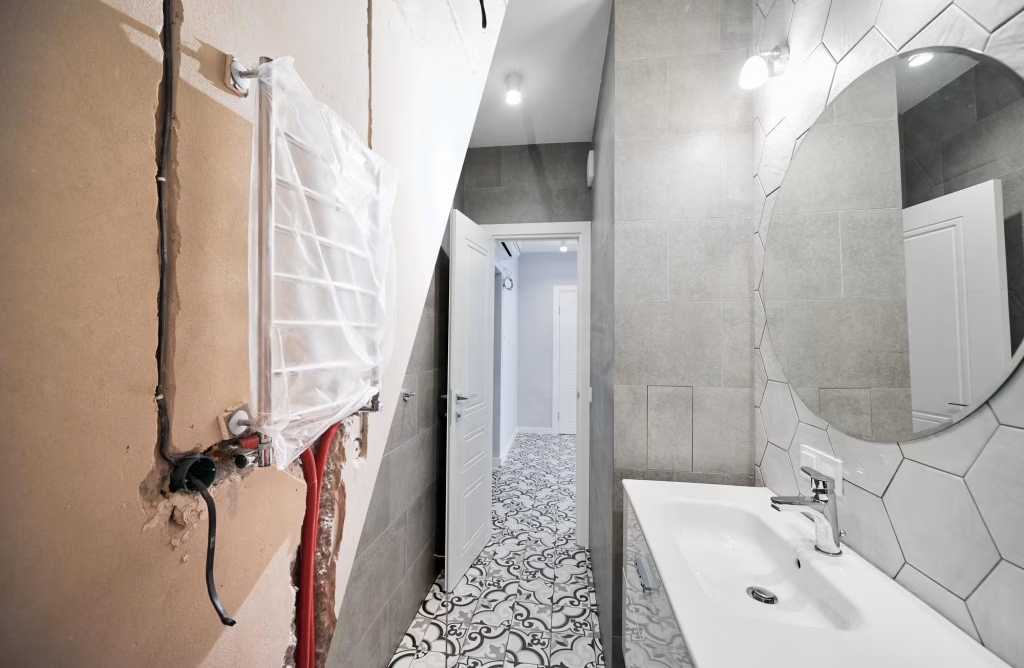
A Practical Example
A household with one bathroom plans to stay with relatives during the main construction work, then return when the toilet and basin are available.
Before booking, they establish:
- Which construction milestone supports that return.
- Who confirms readiness.
- Whether the route to the bathroom is suitable.
- How they will manage without a shower if it remains unavailable.
- Where they can stay if the milestone moves.
That is more dependable than planning to return on a fixed day because the renovation is expected to be “mostly finished.”
The right arrangement will differ by household, but it should answer the same basic questions.
Frequently Asked Questions
Can I stay at home while my only bathroom is renovated?
It depends on the scope and whether suitable alternative facilities are reliably available. Discuss toilet, washing and overnight needs before work starts rather than assuming the room can remain usable.
Can the toilet be reconnected every evening?
Do not assume this is feasible throughout the project. Ask whether it is appropriate for the proposed work, when it could be provided and whether it is included in the price. Keep an alternative arrangement available.
When can we use the new shower?
Use it only after the contractor confirms it is ready, taking account of the completed installation, required checks and product instructions. Its appearance alone does not establish readiness.
Plan the Household Arrangements Before Demolition
Tell us that this is your only bathroom at the first discussion. Include who lives in the home, any access needs and the alternative facilities you are considering.
Planning a bathroom renovation in Toronto? Request a quote with photographs and your proposed changes so we can discuss both the construction scope and the practical arrangements it requires.

John Dermani, founder of Arnold Homes, started the company with a clear goal — to deliver reliable, high-quality renovations and builds that homeowners can trust. Over the years, John has built a team of skilled tradespeople and project managers who share his passion for precision and craftsmanship.